
00
Initial Notes
INITIAL NOTES
Preliminary reflections that introduce the origin, purpose and interpretive foundations of the work.
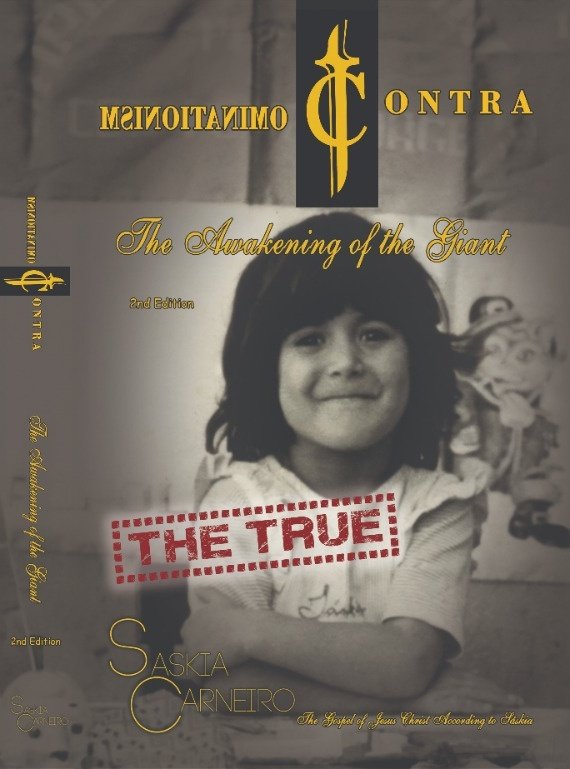
A work that invites readers to question appearances, search for truth, and reflect on human freedom, power, spirituality, and social life.
This is the book. Although it records a true story, it is presented in a form that allows the reader to interact with its content as though entering a fictional narrative.
In the time described here, the world is submerged in lies. Human beings therefore need to distrust appearances in order to reach the truth. Seeking to unite everyone around truth, the book goes beyond a strictly religious view of God and also presents an atheistic way of understanding Him.
God is also approached as the highest evolutionary and psychological structure shared by all human beings — the supreme truth. Looking at life from this elevated point of view makes it possible to reconsider power, freedom, family, society, spirituality and the forces that shape human behavior.
The work invites the reader not merely to accept conclusions, but to observe, question and awaken the giant that exists within every human being.
Each chapter below includes a brief indication of its central theme. Open it in the online reader or download the PDF.
Preliminary reflections that introduce the origin, purpose and interpretive foundations of the work.
An opening invitation to question appearances, search for truth and understand the book’s central proposal.
A reflection on language, division and the symbolic meaning of the Tower of Babel in human society.
The presentation of dominationism as a system of control that acts through power, culture and human relationships.
An examination of power and the conditions required for human beings to exercise genuine free will.
A study of the gaze as an immediate language capable of transmitting recognition, judgment, fear and affection.
Using the image of the seed and the tree, the chapter explores origins, development and the consequences of human actions.
A reflection on family authority, care, responsibility and the limits between protection and domination.
An examination of social recognition, validation and the forces that unite or separate human beings.
A broad reflection on physical, biological, psychological and social time, and on how modern life accelerates human experience.
An analysis of ideologies and social mechanisms that divide people through identity, prejudice and opposition.
A study of adolescence, identity formation, vulnerability and the pressures imposed on young people.
A reflection on depression, emotional suffering and the social and economic interests involved in defining illness.
An analysis of economic power, education, family roles and the weakening of adult responsibility before children.
A critical reflection on Brazilian electoral power, corruption and the consequences of political systems for human life.
An examination of addictions, drug policy, health interests and the struggle for control over treatments and substances.
A concluding reflection on dehumanization, war, violence and the structures that transform death into an industry.